

TL;DR: Video and design services cover shoots, editing, motion graphics and animation. Per-project pricing suits a one-off film; a credit or retained plan suits teams publishing weekly. Three of the six publish an entry price. Compare on the cost of one representative quarter, not a headline rate.
What video and design services cover
Video and design services cover the production and creative work behind every video a brand publishes: filming, editing, motion graphics, animation, and the visual polish that turns raw footage into something you can ship.
For a growing team the work usually falls into four buckets.
- Product demos and explainers. Videos that show how a product works to a first-time viewer. They sit on homepages, product pages and inside sales decks.
- Paid ad variations. Short-form video built for paid social and YouTube pre-roll, shipped in several lengths, ratios and hooks so a performance team can test.
- Brand and campaign films. Longer pieces that anchor a launch or a category position.
- Social-first content. Vertical video made natively for Reels, TikTok and LinkedIn, designed to work with the sound off.
Most teams need all four in the same quarter. That is the thing to design your vendor choice around.
Six video and design services compared
| Service | Model | Entry price | Shoots | Best for |
|---|---|---|---|---|
| SoCreative | Quarterly credit plan | From $4,200 a quarter, 6 credits, published | Yes, global network | Teams shipping video continuously across formats |
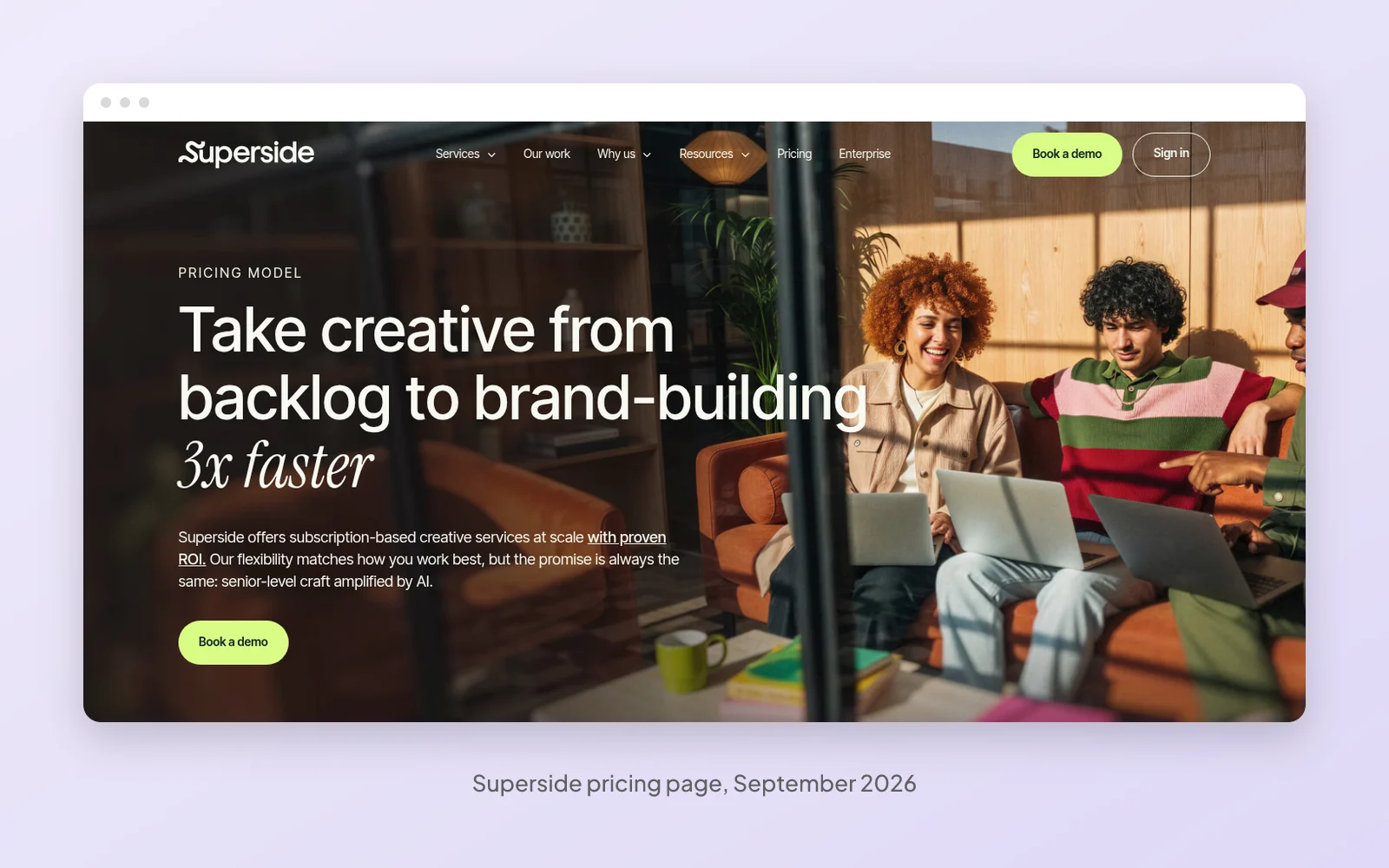
| Superside | Retained creative team, annual term | From $15,000 a month plus a $1,000 software fee, published | Yes | Enterprise teams buying video alongside design |
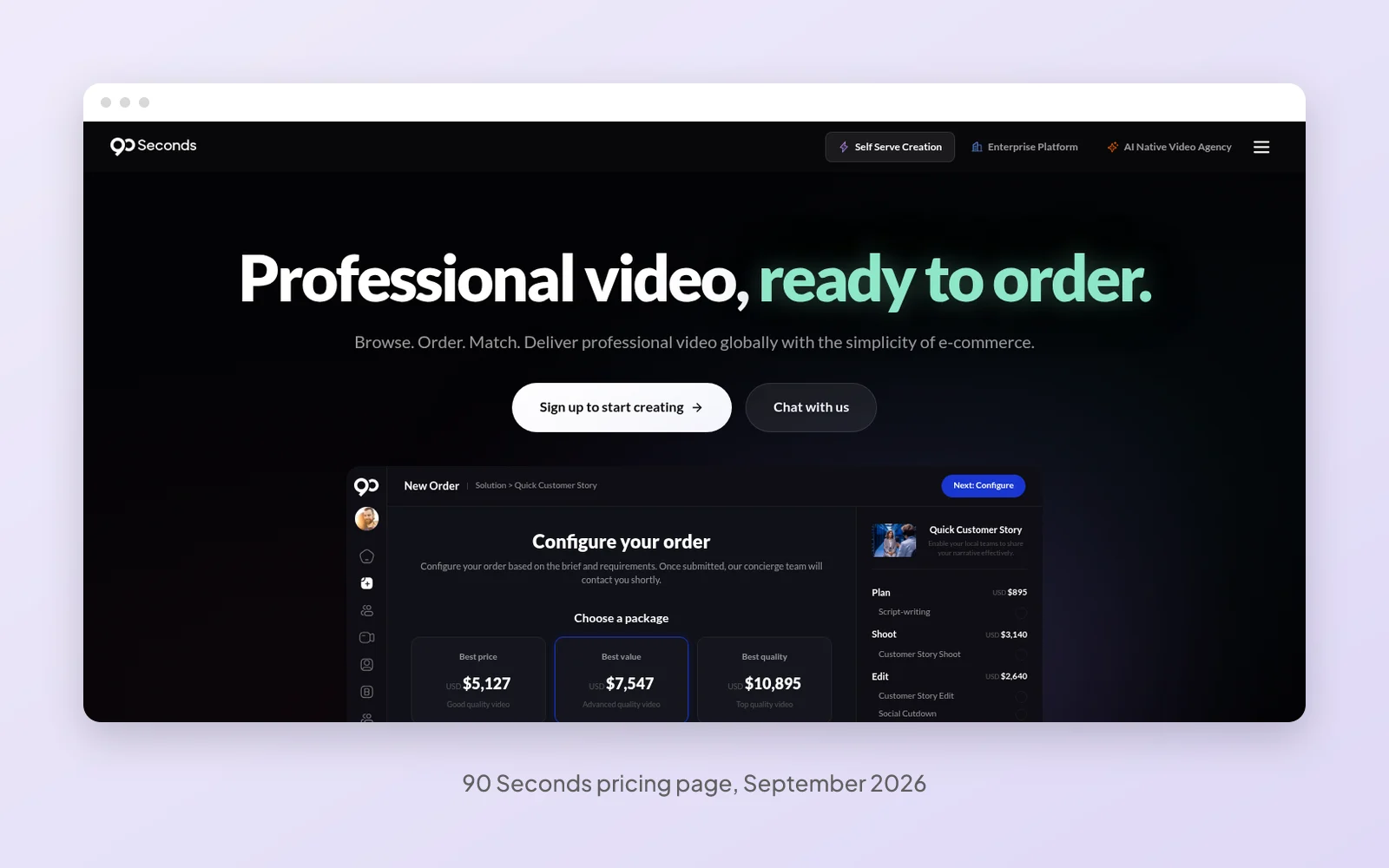
| 90 Seconds | Per project, self-serve packages | From $5,127 a video for a customer story, published | Yes, global crews | Multi-market shoots and event coverage |
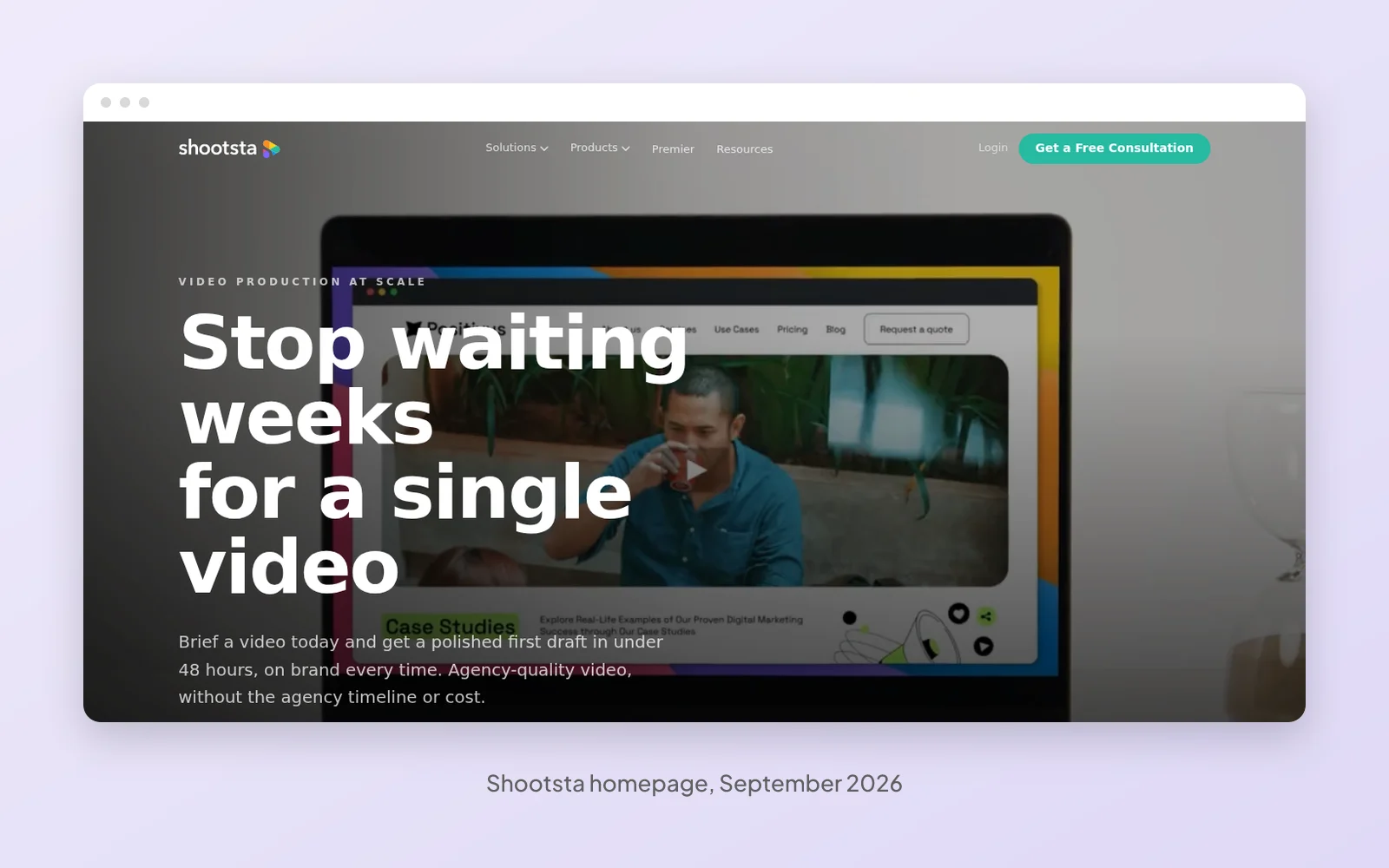
| Shootsta | Annual credits, you capture, they finish | Quoted annually, not published | You capture, they edit | Teams building in-house capture capability |
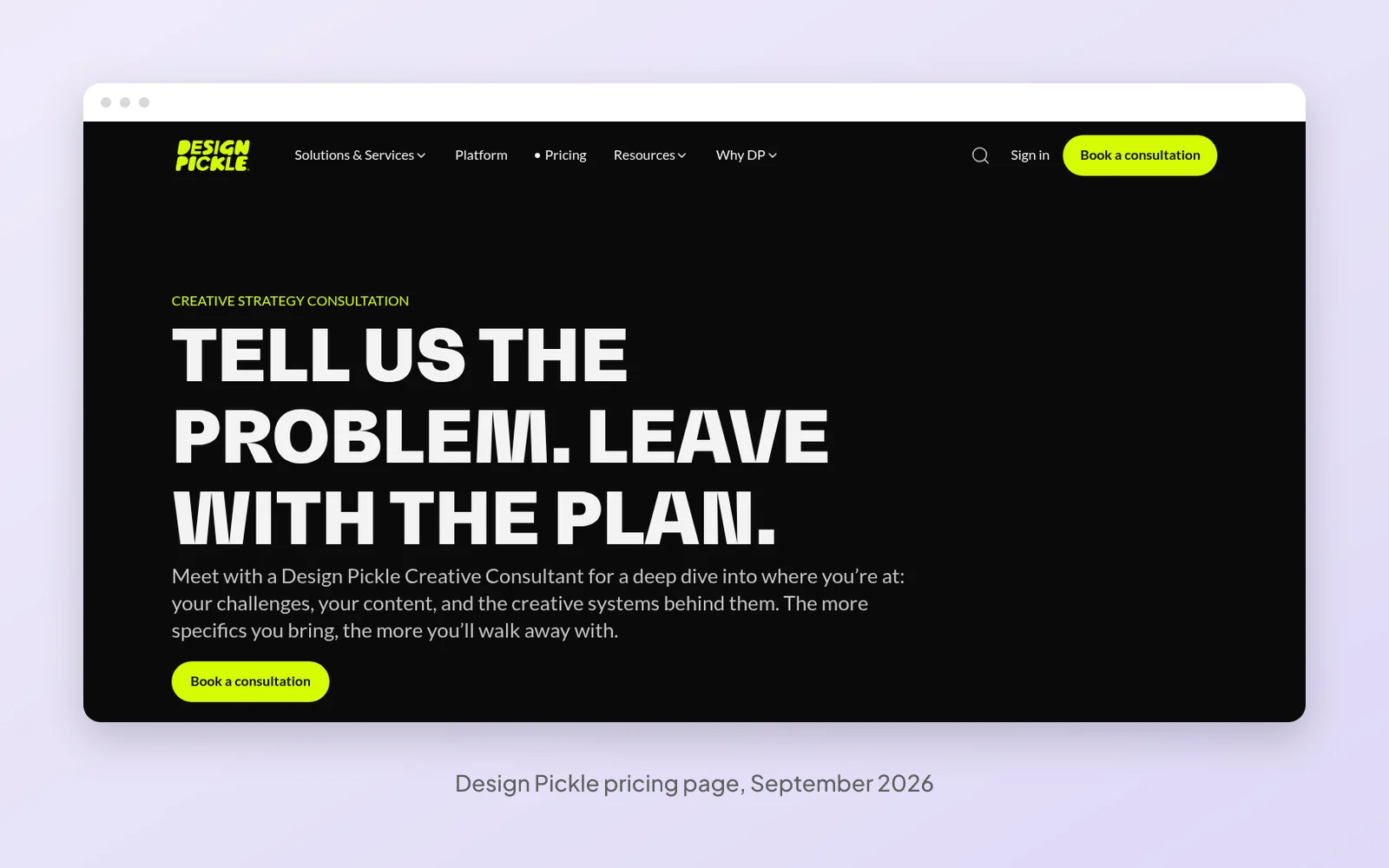
| Design Pickle | Monthly creative hours | Quoted on a call, not published | No | Static ad creative with light motion |
| Kimp | Flat monthly, unlimited requests | Flat monthly fee, not published | No | High volume of short edits and resizes |
SoCreative
We run on a quarterly credit plan. You agree the plan, get a fixed number of credits, and spend them across shoots, editing, motion graphics, animation and design as the quarter demands. The entry plan is $4,200 a quarter for 6 credits, which works out at $700 a credit.
The credit model fits growing teams because video needs rarely stay in one lane. One quarter might carry a homepage demo, a customer testimonial shoot, animated cutdowns for paid social and motion graphics for a feature launch. Shoots run through a global network of vetted videographers, and the same in-house editors and designers finish the work in every market, so the output looks like one brand.
Strengths
- Credits cover shoots, editing, motion graphics and animation under one plan
- Most editing projects are delivered in 24 to 48 hours, with confirmed timelines on larger productions
- Shoots in most cities without your team sourcing a local crew each time
- Pricing is published, so a quarter can be budgeted before you start
Limitations
- Plans run on an annual agreement, so it is not built for a single one-off film
- Credits are sized for continuous output; a team publishing two videos a year will not use them
Superside
Superside sells a retained creative team covering design and video together, and it is the most direct enterprise comparison in this list. Pricing is now published: subscriptions start at a $15,000 monthly minimum on an annual term, plus a $1,000 monthly software fee for platform access, per superside.com/pricing in September 2026. That floor tells you who the product is built for.
Strengths
- Broad creative coverage, with video sitting alongside design in one retainer
- Built for enterprise volume and enterprise review cycles
- Pricing floor is public, which most of this category still will not do
Limitations
- The $15,000 monthly minimum rules it out for most growing teams
- Annual commitment on every subscription
- No production network of its own for original footage
90 Seconds
90 Seconds runs a marketplace of local production crews and coordinates shoots across many countries, which makes it useful when a campaign needs footage in several markets at once. Work is bought per video rather than as a plan, and the prices are on the page: a customer story is offered at $5,127, $7,547 or $10,895 depending on the quality tier, with the plan, shoot and edit costed as separate lines, per 90seconds.com/pricing in September 2026.
Strengths
- Genuine global shoot coverage through a large creator network
- Per-video structure suits a defined campaign with a fixed scope, and the price is published before you talk to anyone
Limitations
- A marketplace means a different crew each time, so brand memory sits with your team
- Every new request restarts scoping and quoting
Shootsta
Shootsta is a hybrid: your team captures the footage with a supplied kit, and Shootsta edits it. It suits an organization that wants to build its own capture habit, particularly for internal comms and learning content.
Strengths
- Lower cost per video once your team is capturing confidently
- Editing is handled by an account team that learns your templates
Limitations
- Quality is capped by whoever is holding the camera
- Annual contracts only, and pricing is quoted rather than published
Design Pickle
Design Pickle is a design service that added video editing and motion graphics to its higher tiers. It fits teams whose video work is light motion on existing assets rather than original production.
Strengths
- Strong on static ad creative, with motion as an extension of it
- One team covering design and simple video together
Limitations
- No shoot support, so original footage has to come from somewhere else
- Pricing moved to creative hours quoted on a call, which makes comparison harder
Kimp
Kimp sells flat monthly plans covering unlimited video editing and motion graphics requests through an assigned team. It is built for volume of small work.
Strengths
- Predictable flat fee with no per-request quoting
- Good fit for resizes, cutdowns and high-volume social edits
Limitations
- No shoots, so it sits entirely in post-production
- Built for smaller teams, and quality varies across assigned designers
What video and design services cost
Two models dominate and they fail in opposite directions.
Per project. Agencies quote against scope, production complexity and revision rounds. It is the right shape for a launch film that needs weeks of pre-production. It gets expensive when you need video continuously, because every deliverable triggers a fresh scope, quote and negotiation. That cycle rarely shows up on the invoice and almost always shows up in the calendar.
Credit and retained plans. You agree a plan for the quarter or the year and submit requests against it. The scoping happens once, so the cost per deliverable is known in advance and the quarter can be forecast.
The gap between the two published plan entry points is the clearest thing a buyer can act on.
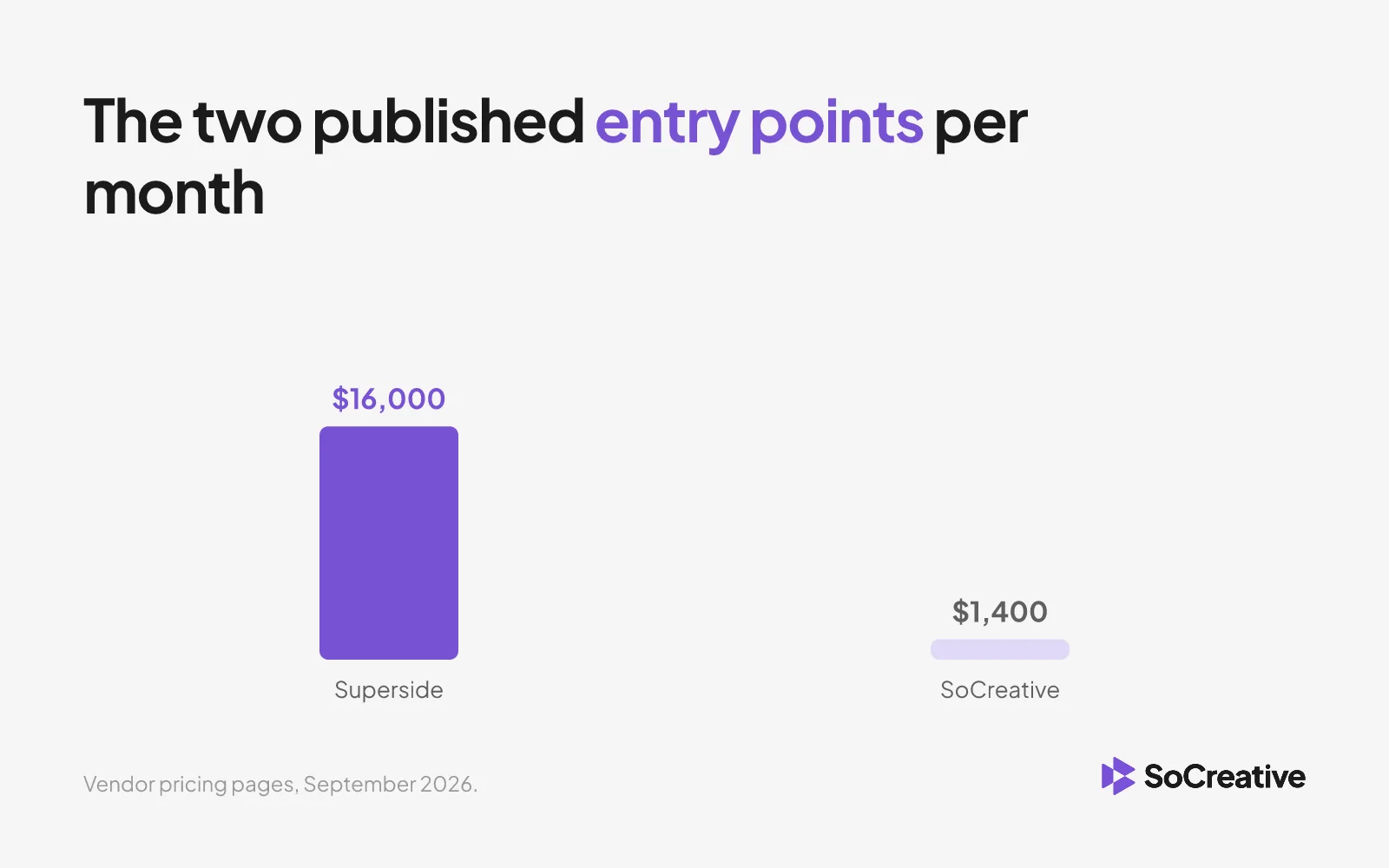
Half of this category still quotes privately, so a like-for-like comparison means asking each vendor for platform fee plus production spend and converting everything into what one representative quarter of your real output would cost.
If you want to model that against what you spend now, our savings calculator does the arithmetic and our pricing page lists what each plan includes.
How to choose
Start with cadence, not portfolio. A team publishing two videos a year should buy a project. A team publishing weekly should buy capacity, because the scoping cycle will otherwise cost more than the editing.
Then ask whether you need footage created or only finished. A post-production service cannot solve a shoot, and a shoot-led vendor rarely turns around a resize by Friday. Teams that need both usually end up running two vendors unless they pick one that covers the chain.
Finally, insist on a number. A vendor that will not put an entry price in writing before a sales call is telling you something about how the rest of the relationship will feel.
Frequently asked questions
Video and design work is no longer an occasional purchase for a growing brand. It is a standing requirement across marketing, sales and product, and the vendor that fits is the one whose model matches how often you publish. Decide the cadence first, then the shape of the plan, then the vendor.

Written by
James Daher
Co-founder, SoCreative
James co-founded SoCreative and has spent five years helping marketing teams scale video, photo and design production without the usual bottlenecks. He writes The Rough Cut, a newsletter on running creative production.