Video SEO is what decides whether the videos you produce actually get found. Most brands skip it and simply upload the finished cut to YouTube and hope the algorithm sorts it out, which does not always work out
The problem is that video SEO now runs across three platforms instead of one. Google ranks videos inside search results and AI Overviews. YouTube ranks videos inside its own platform. AI search tools like ChatGPT pull from both. Optimizing for one platform does not automatically optimize for the others, and treating them as a single strategy is what separates videos that rank from videos that disappear.
This guide covers what video SEO actually means today, how to optimize for each platform, and the technical basics your videos need to compete.
What is video SEO?
Video SEO is the practice of optimizing video content so it ranks on search engines, video platforms, and AI-powered search tools. The goal is to make your videos discoverable when your audience is searching for what you cover.
YouTube runs its own algorithm that decides what to surface inside the platform. Google Search runs a separate algorithm that decides which videos show up in web search results and AI Overviews. AI tools like ChatGPT often rely on Google’s index to pull sources, which means video that ranks well on Google Search tends to earn more AI citations as a downstream effect.
Because each surface behaves differently, a complete video SEO strategy has to account for all three. The same video can rank well on one platform and go invisible on another.
Does video help SEO?
Yes, but only when the technical setup does not fight against you.
Video improves time on page, reduces bounce rate, and signals to search engines that the content is worth surfacing. It also expands the surface area where your content can appear, since a well-optimized video can show up as a rich result, a video carousel, a suggested clip inside YouTube, and a source citation inside an AI search answer.
The catch is that all of those benefits depend on the video being properly embedded, indexed, and described. A video buried inside a slow-loading page with no transcript is invisible to search engines and useless for SEO.
YouTube SEO vs. Google video SEO
These two often get treated as the same thing, and they are not.
YouTube SEO is about ranking inside YouTube. The platform’s algorithm rewards videos that hold viewer attention, earn clicks from thumbnails, and match search queries clearly. What a viewer has watched before also shapes what YouTube recommends to them next.
Google video SEO is about ranking inside Google Search. Google does not sit inside the video itself. It reads the page around the video, the text on the page, and any schema markup that describes what the video is about. A video that YouTube pushes to millions of viewers can still fail to appear in Google Search if the hosting page gives Google nothing to work with.
Because AI search platforms increasingly pull from Google’s index, ranking well on Google Search now compounds into AI citations too. That downstream effect is one of the more overlooked reasons to take Google video SEO seriously.
How to do SEO for YouTube videos
Ranking on YouTube starts with understanding what the platform actually rewards.
- Pick keywords with real video intent: Not every topic wants a video. Before committing to a video, run the target keyword through Google and see what shows up. If the results are dominated by articles and no video block appears, that topic is text-first and a video will not rank against it, no matter how well produced. The keywords worth chasing are the ones where video already dominates the results.
- Write titles that balance clarity and curiosity: A title needs to signal what the video is about clearly enough that YouTube’s algorithm can match it to searches, and interesting enough that viewers actually click. Titles that lean too far into curiosity get views but no search visibility. Titles that lean too far into keywords get search visibility but no clicks.
- Keep titles under 60 characters: Longer titles get cut off in search results, which hurts both YouTube and Google visibility.
- Write descriptions that do real work: The first two lines matter most, since that is what shows up in search results and previews. Include your primary keyword naturally, add timestamps for longer videos, and use the space to give context that helps both algorithms and viewers.
- Design thumbnails that compete for the click: Thumbnails drive click-through rate, which drives ranking. High-contrast colors, clear focal points, and a visual promise that matches the title tend to outperform stylized thumbnails that hide the point.
- Prioritize engagement early: YouTube’s algorithm reads the first 24 to 48 hours of a video’s performance heavily. Videos with strong watch time, likes, and comments in that window get pushed to more viewers.
How to optimize video for Google Search
Google video SEO is a different sport. Ranking here depends on the page hosting the video as much as the video itself.
Add a transcript to every embedded video: Search engines cannot read what happens inside a video. A transcript gives crawlers real content to index, expands keyword coverage, and improves accessibility. Even a summarized version helps.
Use structured data (video schema): Schema markup tells Google what your video is about, how long it is, and what its thumbnail looks like. Videos with proper schema are more likely to show up as rich results and video carousels in search.
Embed videos on relevant pages: A video about paid social strategy should live on a page about paid social strategy. Contextual relevance improves both user experience and ranking.
Submit a video sitemap: A video sitemap gives Google the metadata it needs to index the video efficiently. If you host video on your own site, this is the most direct way to signal what you want indexed.
Scale your video SEO strategy with SoCreative
Video SEO compounds through volume. If you want your channels and pages to outperform brands shipping one polished video a quarter, you need to publish consistently across formats. But producing at that pace, across long-form for YouTube, short-form for social, and cutdowns for every channel in between, is more than your in-house team can realistically absorb.
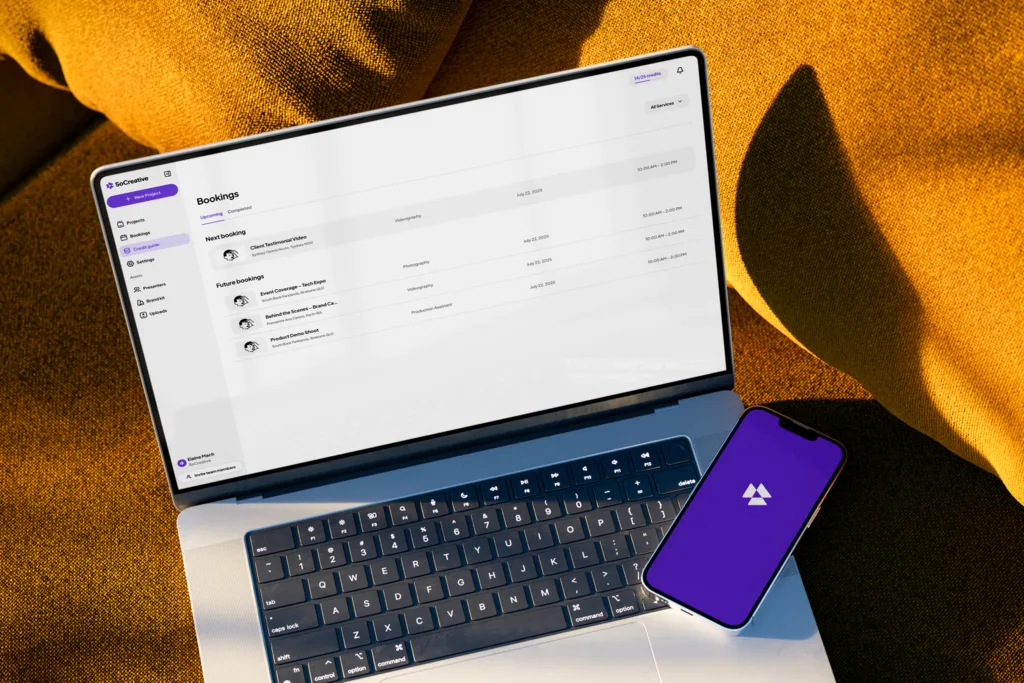
That is where SoCreative comes in. SoCreative is a subscription-based video production service that gives brands ongoing access to editors, designers, and videographers through one platform. You pick a quarterly plan, get a fixed number of credits, and use them across shoots, editing, motion graphics, and design based on whatever your team needs that quarter.
Here is what you get:
- One credit pool across formats. Your credits cover shoots, editing, motion graphics, and design, so a single concept can ship as a YouTube hero, a set of shorts, a landing page embed, and paid social variants without switching vendors.
- 24 to 48 hour turnaround. In-house editors return most of your edits within a day or two, which matches the cadence video SEO needs to compound over time.
- Dedicated project manager. Every request runs through a single point of coordination, so you are not chasing status updates across editors, designers, and videographers.
- Global videographer network. You can book shoots in whichever market you operate in through a vetted network, without sourcing local vendors for every new project.
- Credit-based pricing. You know what every project costs before you submit it, and quarterly plans give you predictable budgeting from the start.
- Centralized platform. Your briefs, footage, feedback, and delivery all live in one place, so nothing gets lost across formats or team handoffs.
Book a demo to see how SoCreative fits into your workflow.
Written by

Ritika Tiwari
Ritika Tiwari is a content strategist and writer with over 10 years of experience creating content for SaaS B2B brands. Outside of work, you’ll likely find her somewhere near the ocean.